Accessify
Link to prototype
Objective
For people with mobility impairments, finding accessible places to eat, exercise, or hang out can be a challenge. I created a prototype to help users assess the accessibility of locations they want to visit.
What I did
- Empathizing Phase
Conducted extensive research into the challenges faced by wheelchair users, including desk research, competitor analysis, usability testing, behavioral mapping, interviews, and surveys. This uncovered critical pain points such as navigation barriers and lack of accessibility information. - Problem Definition
Defined key user needs and crafted a problem statement to guide the design process. Developed user personas to bridge abstract concepts with real-world demands and ensure the app addresses practical accessibility challenges. - Conceptualization
Created low-fidelity wireframes to map out the app's structure and layout. Early feedback loops with stakeholders and users helped refine the design direction, ensuring alignment with user expectations. - Prototyping
Progressed from wireframes to high-fidelity prototypes, incorporating interactive features and graphic elements for immersive usability testing. Iterative revisions were made based on user feedback to enhance functionality and accessibility. - Accessibility Considerations & Testing
Integrated accessibility standards at every stage of design, validating usability through tools and testing with mobility aid users. Continuous feedback loops ensured iterative improvements aligned with user needs.
Creative Process
- Research & Ideation
Leveraged insights from extensive research to identify barriers wheelchair users face in finding accessible venues. Used techniques like analogous inspiration (e.g., color palettes from games like Stardew Valley) and brainstorming exercises ("Worst Idea Possible") to develop innovative design solutions. - Wireframing & Prototyping
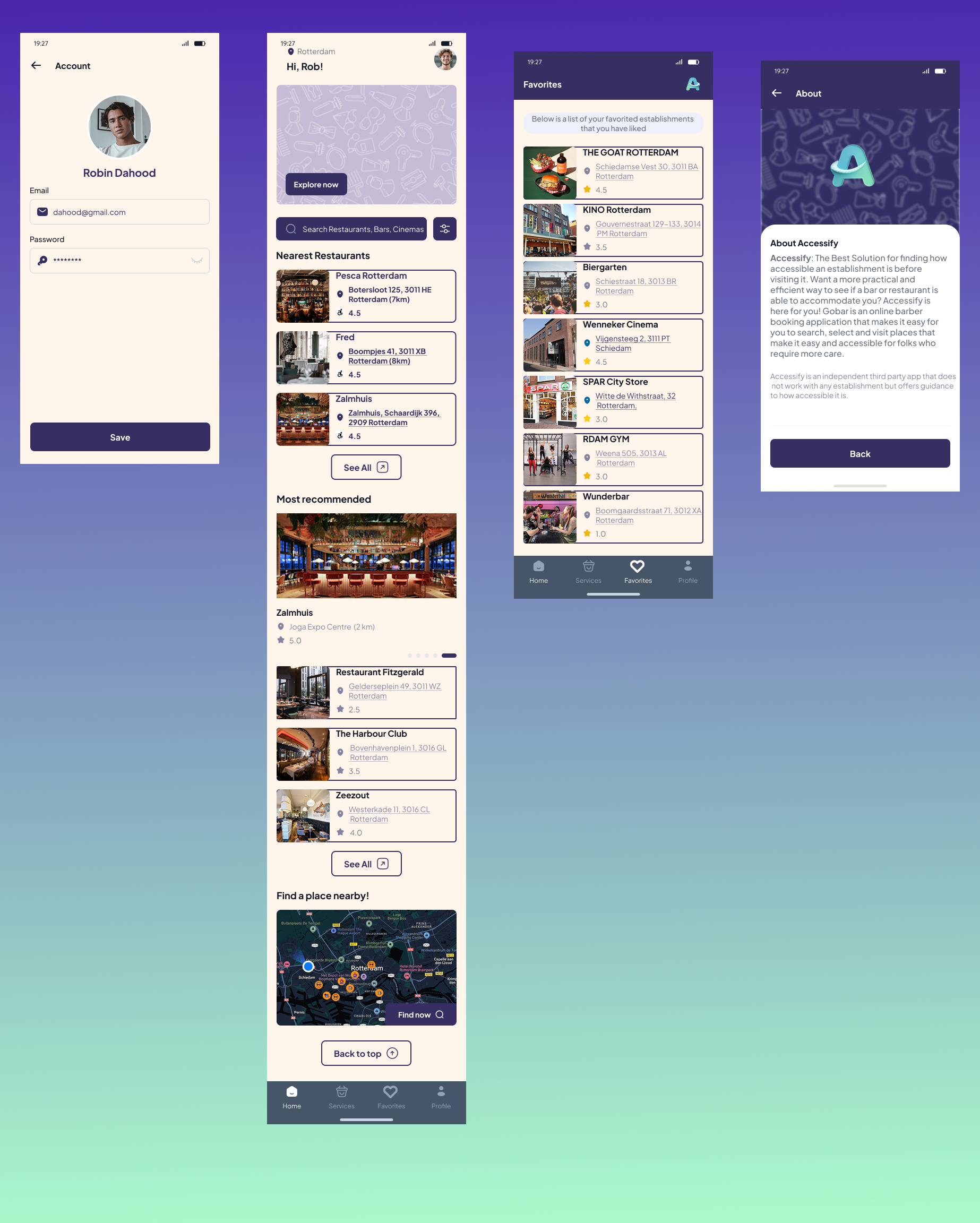
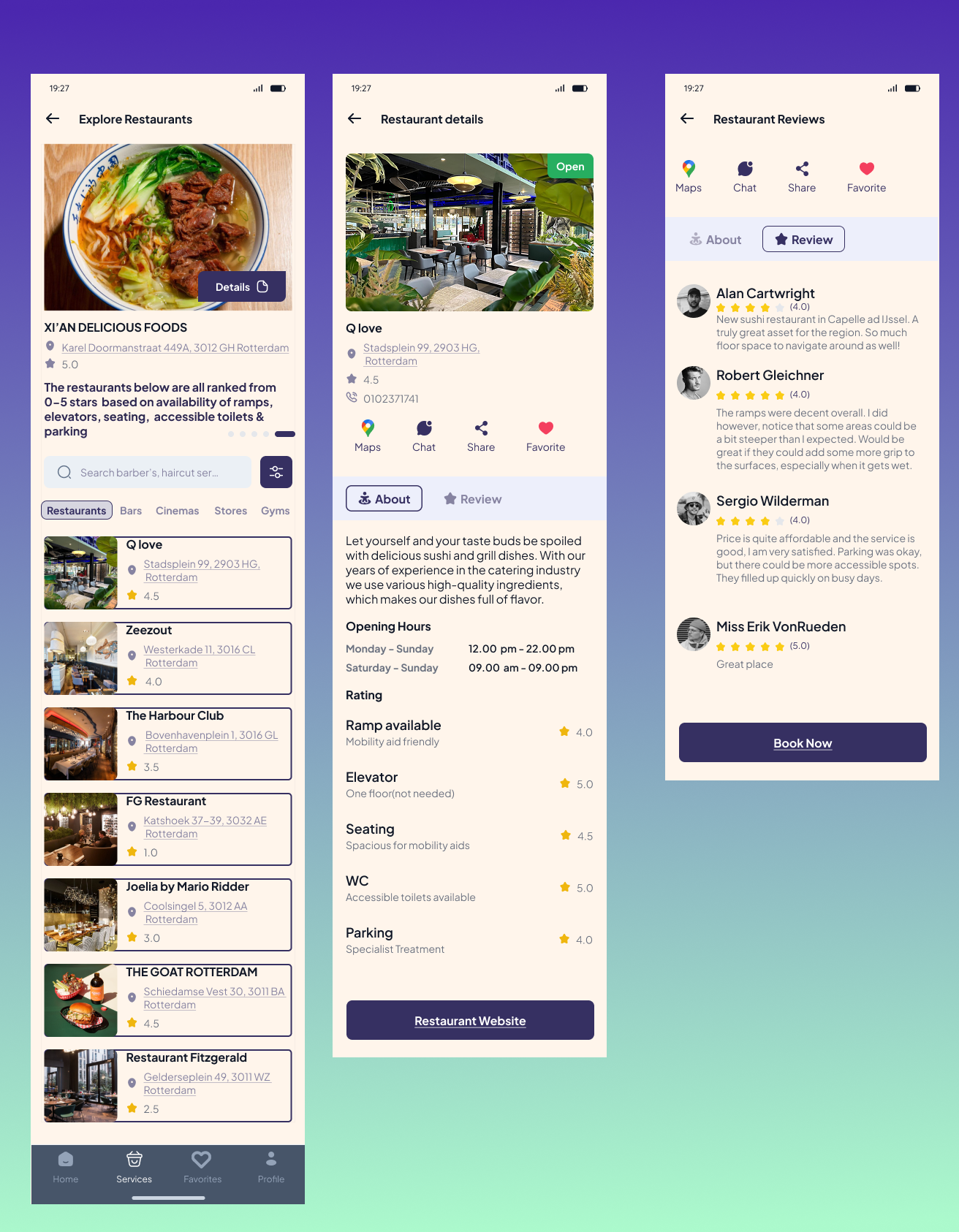
Designed wireframes that evolved into high-fidelity prototypes, allowing realistic testing of features like venue ratings, accessibility tags, and interactive maps for location assessments. - Testing & Refinement
Conducted usability tests to validate design decisions and iteratively refined features such as navigation systems, color schemes, and accessibility tools based on user feedback. - Visual Design
Created a clean and intuitive aesthetic using accessible typography and color palettes that enhance usability while evoking trust and inclusivity.
Results
- A dynamic platform enabling wheelchair users to assess venue accessibility through interactive maps and detailed ratings (e.g., entrances, restrooms, parking).
- Features like an intuitive tagging system for accessibility levels and a seamless interface for exploring venues near them.
- A visually appealing design that balances functionality with inclusivity.
Conclusion
The "AccessiFinder" project exemplifies a commitment to inclusive design by addressing real-world challenges faced by wheelchair users. Through research-driven insights, iterative refinement, and accessibility-focused principles, I created a prototype that empowers users to make informed decisions about accessible places. This project highlights the importance of designing for often-overlooked communities while demonstrating the potential of technology to improve lives.