Greenovation
Link to prototype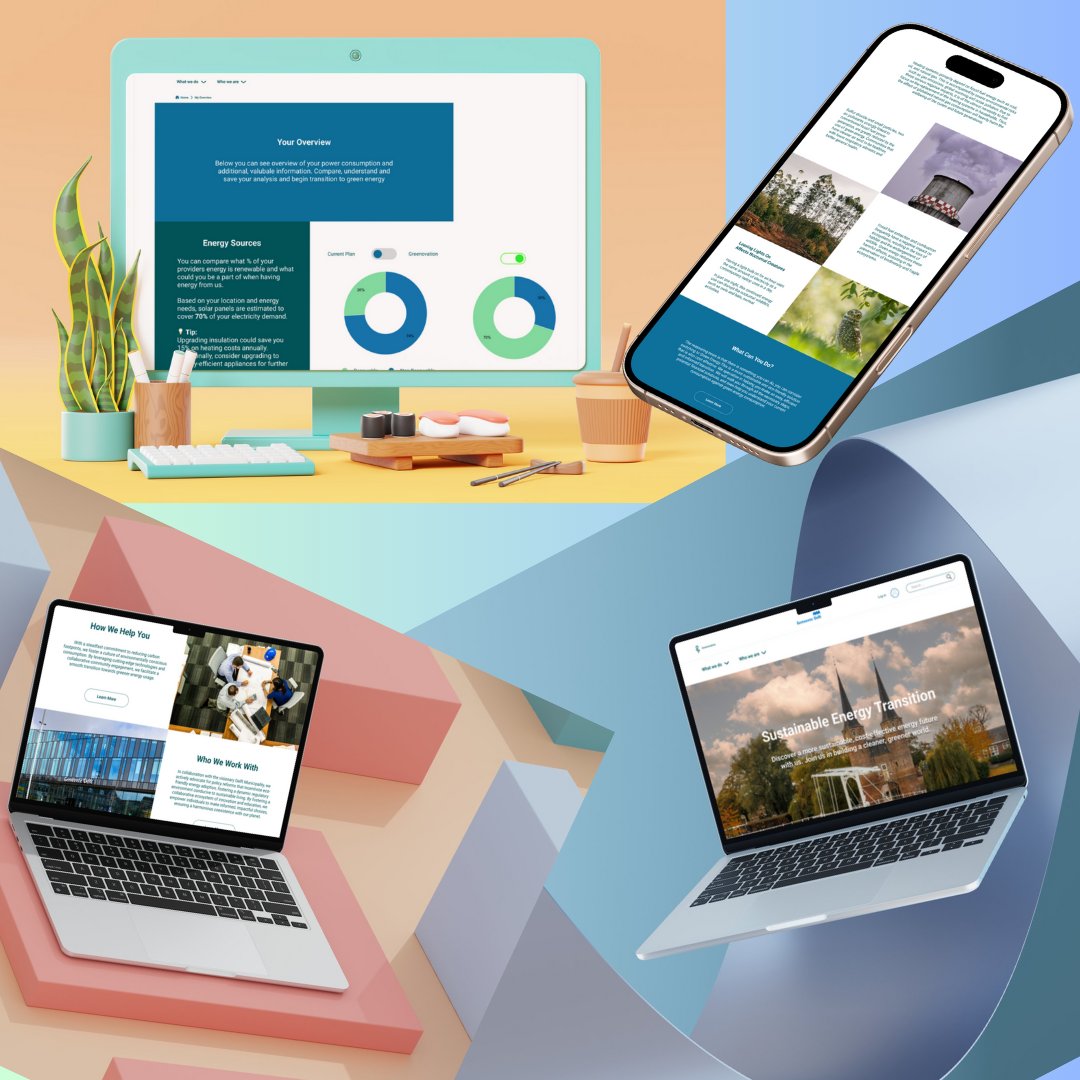
Objective
The primary challenge was to create a user-friendly platform that would guide Delft residents through the stages of understanding, convincing, and taking action towards a gas-free home. We needed to address the unique needs of our target audience while aligning with the municipality's goals for energy transition.
What we did
- Strategic Discovery
Conducted extensive research into user behavior and factors influencing energy transitions, focusing on what motivates behavior change toward adopting green energy solutions. - Three-Stage Approach
Developed a solution guiding users through "Understand," "Convince," and "Action" stages to simplify the energy transition process. - Interactive Home Scanner Tool
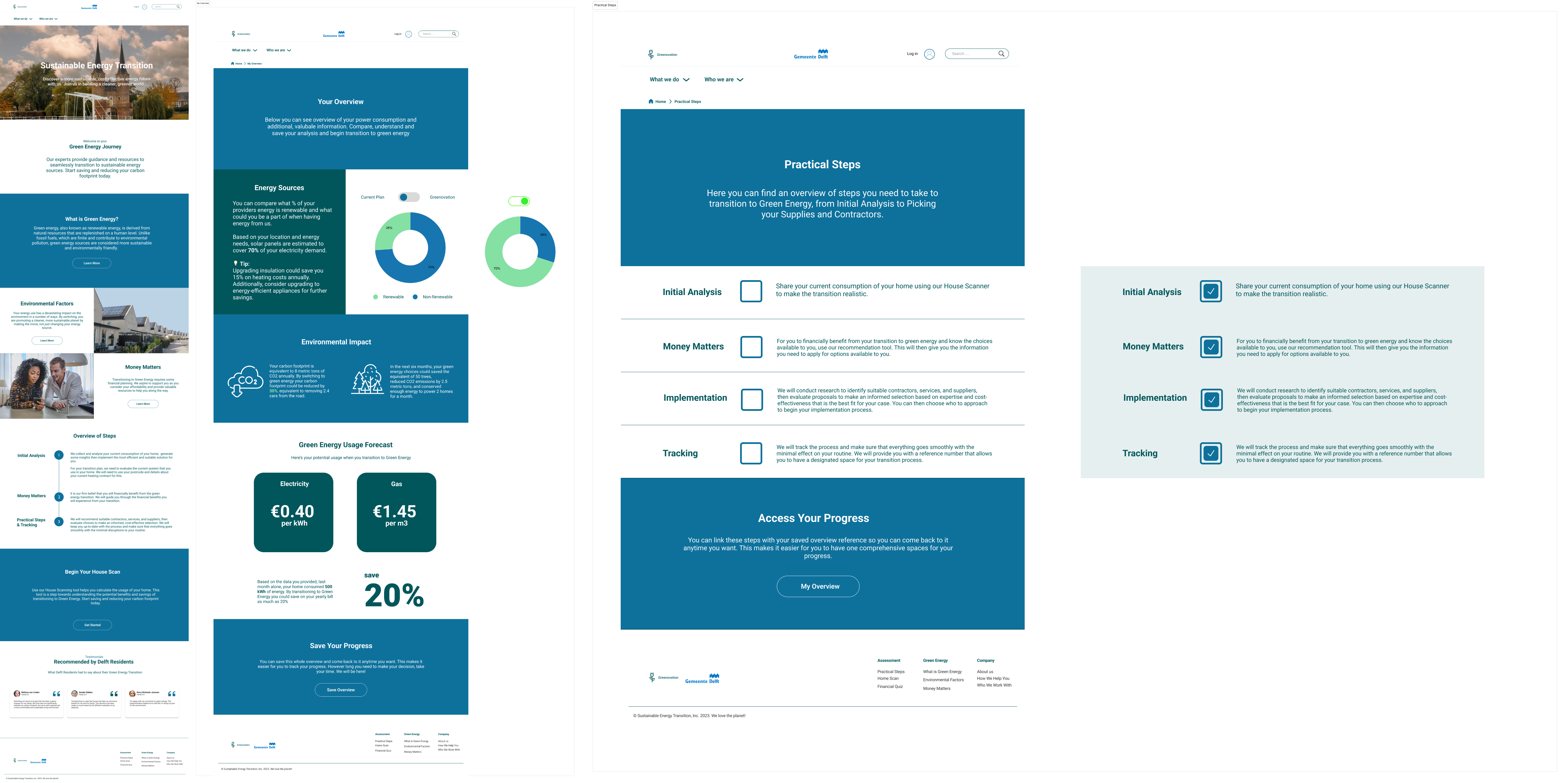
Created a tool enabling users to input home details and receive personalized recommendations for clean energy adoption. - Dashboard Design
Designed a customized dashboard displaying energy consumption data, potential savings, and actionable insights to make the benefits of transitioning tangible for users. - Client Feedback Integration
Iterated designs based on client feedback, aligning visuals with Delft's identity, improving text readability, and simplifying the user interface for enhanced comprehension.
Creative Process
- Research & Empathy
Conducted research to understand user motivations and barriers to behavior change regarding clean energy adoption. This informed the design of tools and pathways that resonate with users’ needs and concerns. - Design Concept Development
Developed two design concepts: one focusing on guiding users through the energy transition stages ("Understand," "Convince," "Action") and another optimizing clean energy homes with an emphasis on control, money, and metrics. The first concept was chosen as the primary focus based on client preferences. - Sprint Execution & Iteration
Refined backlog tasks based on user stories during Sprint 1, creating initial designs that underwent significant iterations based on feedback. Adjustments included enhancing alignment with Delft’s identity, simplifying dashboards, improving readability, and adding financial details to support decision-making. - Finalization & Local Relevance
Incorporated Delft-specific imagery, language, trusted partners, and testimonials into the design to build trust and create a sense of community relevance.
Results
The final product delivered:
- A user-friendly platform guiding residents through understanding, convincing, and taking action toward a gas-free home.
- An interactive Home Scanner tool providing personalized recommendations tailored to individual needs.
- A streamlined dashboard displaying energy consumption data and savings potential in an intuitive format.
- A clean interface with strong local relevance, fostering trust among users for such significant transitions.
Conclusion
The Greenovation project successfully empowered Delft residents to make informed decisions about adopting clean energy solutions while aligning with the city’s energy transition goals. By combining research-driven insights, iterative design processes, and local relevance, we created a valuable tool that addresses both community needs and sustainability objectives.
.png)